Call Us


Medically reviewed by Dr. Dhara Pooj (PT)
- BPTh
- 6 min read
Ankylosing spondylitis commonly starts with the inflammation of the sacroiliac joints that connect the lower part of the spine to the pelvis. It is a progressive condition and over the period of time involves the entire spine. It is diagnosed by medical history, physical examination and imaging tests like X-ray or MRI. The treatment for ankylosing spondylitis involves non-surgical treatment like medicines and exercises to manage pain and stiffness and delay the disease progression.
At QI Spine, we manage ankylosing spondylitis through a targeted approach that helps manage pain and stiffness, build strength and delay disease progression.
How is ankylosing spondylitis diagnosed?
Ankylosing spondylitis, also called axial spondyloarthritis, is diagnosed by medical history, family history and understanding of other symptoms. The doctor may perform a physical exam to check for any movement restrictions, postural changes and muscle strength. Imaging tests like X-ray or MRI might be suggested if required.
Medical History
Your doctor may ask you certain questions to understand if you have ankylosing spondylitis:
Onset and triggers:
- When was the first time you experienced pain?
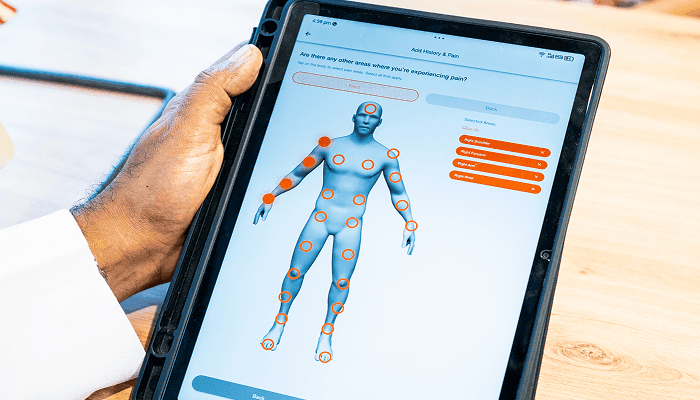
- Where are you experiencing the pain?
- Was your pain sudden, or did it develop gradually?
- Do you experience back stiffness that increases with rest and improves with movement?
- Do your symptoms get worse at any certain time of the day or night?
- Does pain affect your sleep, work or daily routine?
- Do you feel fatigued or have difficulty breathing?
Aggravating and relieving factors:
- Do any activities increase your pain or stiffness?
- What helps you relieve your pain - any medicines, activity or movement, etc.?
Family history
- Does anyone in the family have a similar history of pain?
History of any medical conditions:
- Do you have any other symptoms of inflammatory bowel disease, psoriasis (skin rashes), or uveitis (blurring of vision, eye irritation, or pain in the eye)?
- Use of any medications that may be important or significant.
Physical evaluation
A physical assessment may include the following:
Posture:
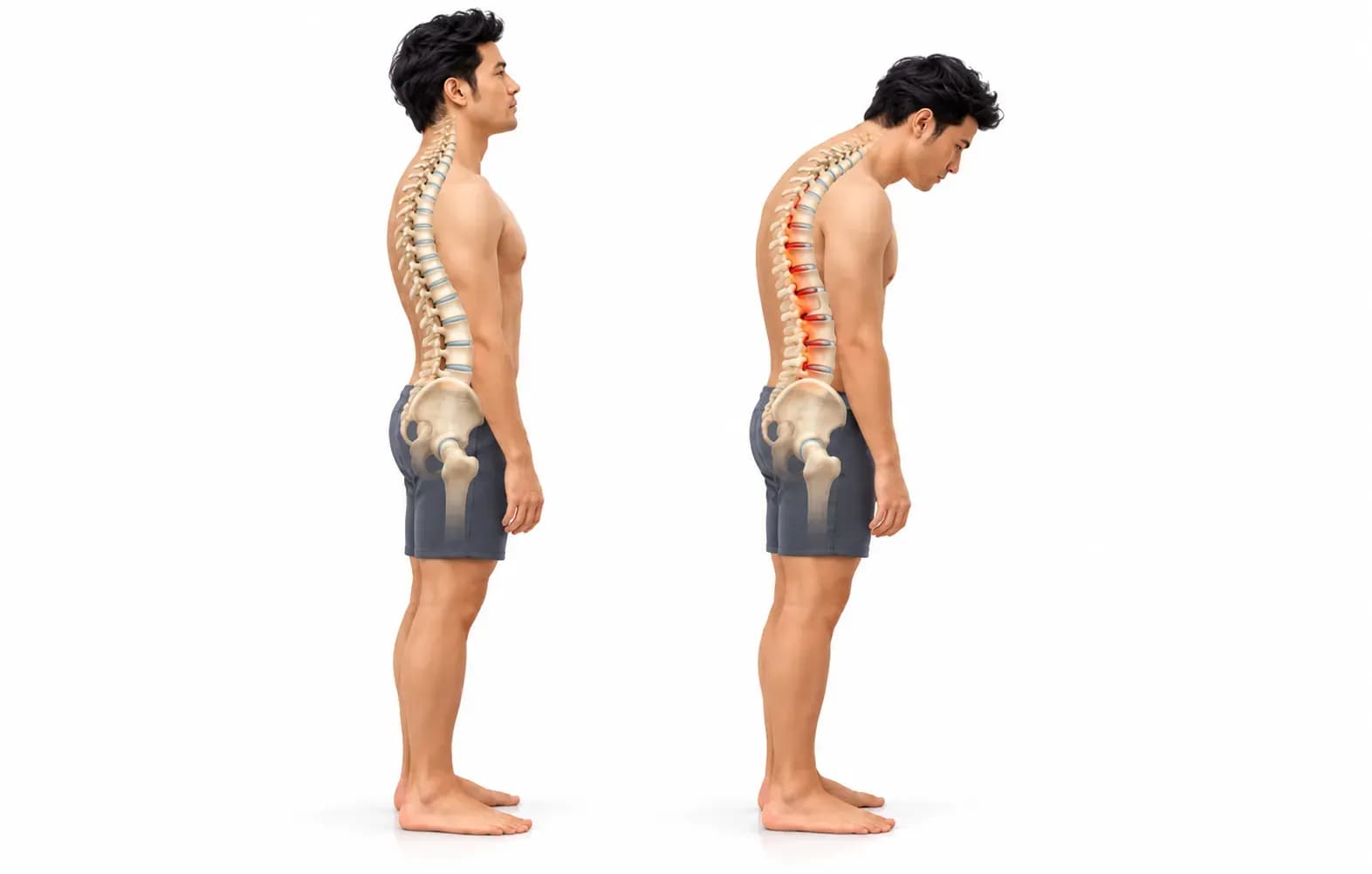
Postural changes like forward-bent or stooped posture, due to kyphosis, may be seen. Reduced lumbar lordosis (flattening of the lower back) may occur in advanced stages.
Range of motion:
Range of motion of back, neck, hip and shoulder joints is commonly done to assess movement limitations due to pain and inflammation.
Muscle strength:
Strength testing of back, core, hip and other lower limb muscles may be done. If shoulder involvement is present, evaluation may also include testing of the surrounding muscle groups around the shoulder.
Respiratory assessment:
Measurement of chest wall movement during breathing may be done to check if expansion of the chest cavity is reduced due to rib stiffness.
Special tests:
Special tests like Sacro-iliac Compression test, Straight Leg Raise test and Gaenslen’s test may be done.
Diagnostic tests
The following tests may help in understanding ankylosing spondylitis:
X-ray:
An X-ray commonly helps to see the changes in the bones and joints associated with ankylosing spondylitis. However, an X-ray might appear normal during the initial phase of the condition, and early signs might not be seen. As the condition progresses, an X-ray may show changes like fusion of the vertebrae, flattening of the lower back curvature, development of bony outgrowths and reduced bone density. In later stages, the spine can become straight, giving a bamboo spine appearance.
Magnetic Resonance Imaging (MRI)
An MRI gives images of the bones and other soft tissues (muscles, discs and nerves). An MRI can help understand the inflammation of the sacroiliac joints and help in diagnosing ankylosing spondylitis at an early stage.
Laboratory tests
Blood tests may be done to check for the genetic marker - HLA-B27 and other inflammatory markers. Even though the presence of HLA-B27 in blood is closely associated with ankylosing spondylitis, not everyone with this gene will develop the condition.
Elevated levels of C-reactive protein, which is an inflammatory marker, are found in 50-70% of patients with ankylosing spondylitis.
What are the treatment options for ankylosing spondylitis?
Ankylosing spondylitis is a condition that progresses and can’t be treated completely. The management for ankylosing spondylitis focuses on reducing symptoms like pain and stiffness, slowing down the disease progression and improving the quality of life.
Your treatment intervention may include medications, physiotherapy and exercise therapy.
Medications
The medical management for ankylosing spondylitis includes medicines like:
- Non-steroidal anti-inflammatory medicines (NSAIDs) like ibuprofen and naproxen to reduce pain, inflammation and stiffness.
- Corticosteroid injections for pain relief.
- Disease-modifying anti-rheumatic medicines (DMARDs) to reduce pain and inflammation.
Physiotherapy
Physiotherapy helps in reducing pain, improving movement and flexibility, building muscle strength and slowing down disease progression. A physiotherapist may build a structured plan which includes:
- Pain management:
Gentle mobilisation exercises and electrotherapeutic modalities like TENS (Transcutaneous Electrical Nerve Stimulation) and IFT (Interferential Therapy) may help in relieving pain. Hydrotherapy or aquatherapy may also help in reducing pain and stiffness.
- Exercises:
Range of motion exercises and stretching exercises help in reducing stiffness and improving spinal mobility. Breathing exercises may help in improving lung capacity and reducing chest stiffness.
Strength training may focus on improving muscle strength, mainly the back, neck and core.
- Postural training:
Postural training may include exercises, stretches and the use of postural aids to improve posture.
- Lifestyle modifications:
These may include certain modifications like avoiding one stationary posture for a long time and taking frequent breaks to reduce fatigue, use of postural support aids, and ergonomic modifications like use of proper support for the back and feet.
Surgery for Ankylosing Spondylitis
Surgery is usually not needed for ankylosing spondylitis. It is very rare but can be indicated and done in cases of severe pain and joint damage.
- Osteotomy may be done for kyphosis correction.
- In case of severe hip involvement, joint replacement surgery may be performed.
How is Ankylosing Spondylitis managed at QI Spine?
At QI Spine, a multidisciplinary team of non-surgical orthopaedic care experts and spine specialists builds a targeted plan. Our protocols and treatment approach have been shown to reduce pain and improve movement and function, backed by research published in medical journals.
Multi-layer Diagnosis:
At QI Spine, we do an orthopaedic-led assessment to understand the root cause of your symptoms. Advanced technology is used to identify and validate the diagnosis, based on which we design a personalised treatment plan.
In-clinic Reviews and Treatment:
The in-clinic treatment at QI Spine includes pain management (Cell Repair Therapy, medicines, supplements, or injections if needed, and lifestyle modifications). This is followed by Medical Movement Therapy and targeted training to rebuild strength.
Daily-care Programme:
Our orthopaedic doctors and spine specialists create a structured recovery plan to be followed daily at home. This may include specific movements, use of postural supports, medicines and supplements (as prescribed), and certain lifestyle modifications.
Long-term Care:
Ankylosing spondylitis may progress over time. The long-term care programme helps slow down the progression and improve the quality of life.