Request Appointment
Enter your details and we will be in touch with you shortly;
Or call
8655885566
between 8 am and 8 pm.

Before back pain can be treated it needs to be diagnosed correctly. Identifying and Isolating the root cause of the pain is essential to restoring mobility and function Get a Digital Spine Analysis or DSA - a proprietary test only at QI Spine Clinic.
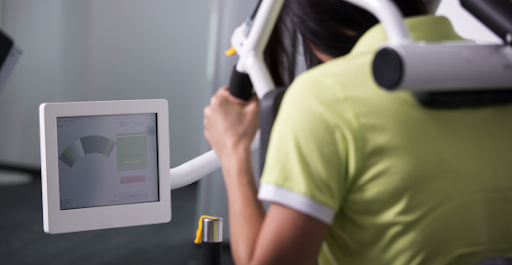
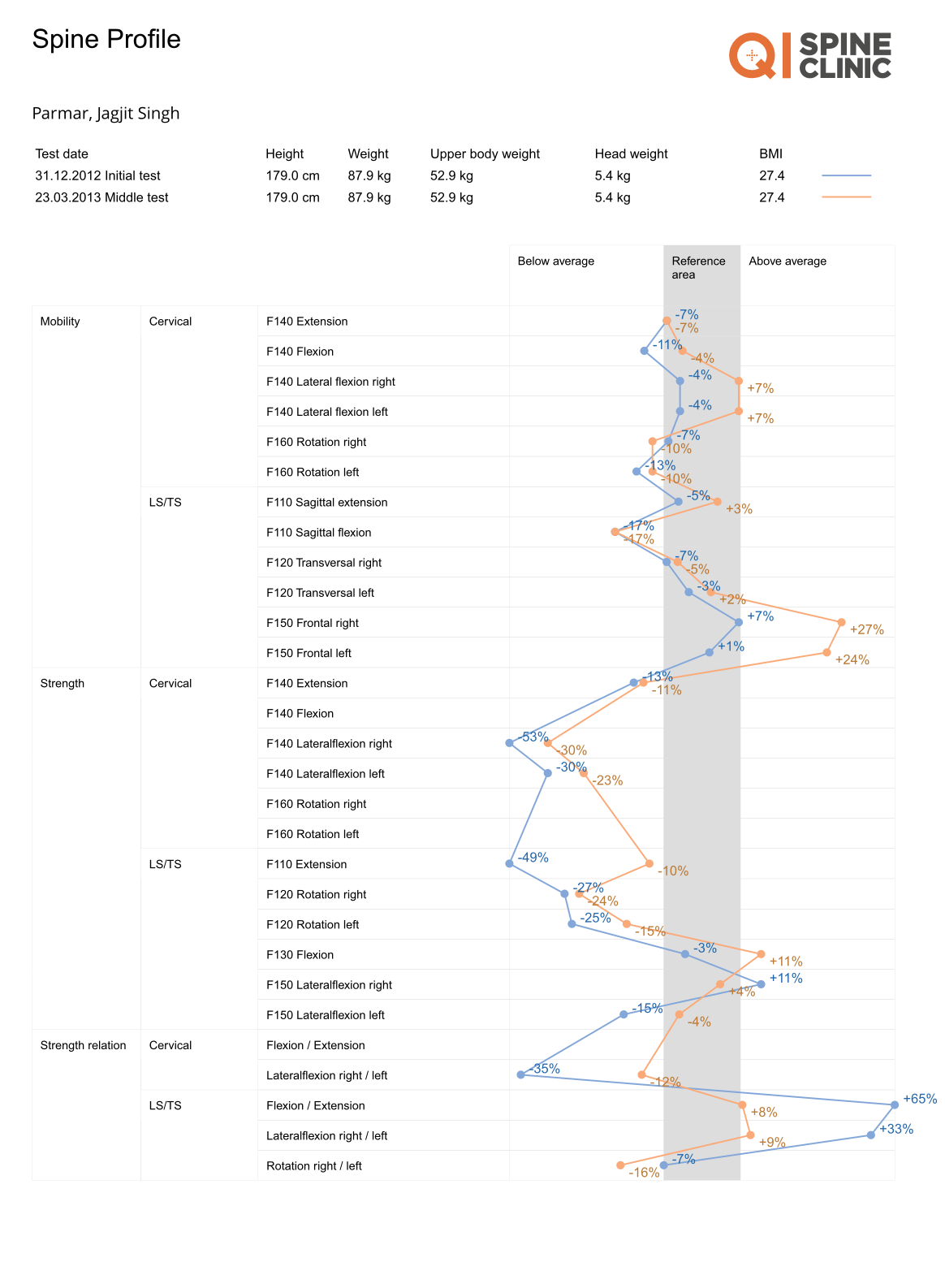
A DSA test is used to measure spine function in the same way that a cardiac stress test is used to diagnose cardiac function. Unlike an MRI or X-ray test that can only provide a visual static snapshot image, the DSA test determines the ability of the muscle tissue to support the spine during various movements.
This test highlights weak tissue that has decreased load-bearing capacity and pinpoints the areas of the spine that are forced to bear the transferred load. This ensures that treatment protocols can then be determined according to the individual’s requirements.
56%
15%
DSA is the only precise functional diagnostic tool that identifies the cause of pain in over 56% of cases when MRIs and X-Rays are effective in a mere 15% of cases.
The bones and spinal discs only bear 30% of the body’s weight, while muscle tissue bears the remaining 70%. When muscle tissues become weak, they are unable to bear the load, which is then transferred to the bones and discs – this is how back problems start.
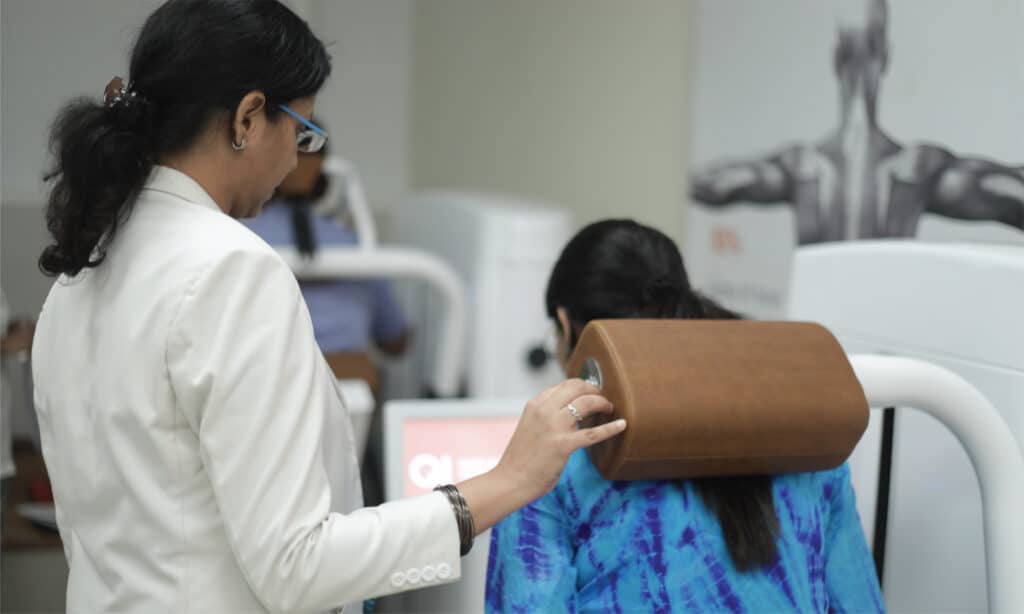
85% of back pain is directly related to weak tissue (also called mechanical dysfunction), which is why DSA is an essential test for spinal problems as it tests the functioning of the tissues around the spine and identifies weak back muscles.
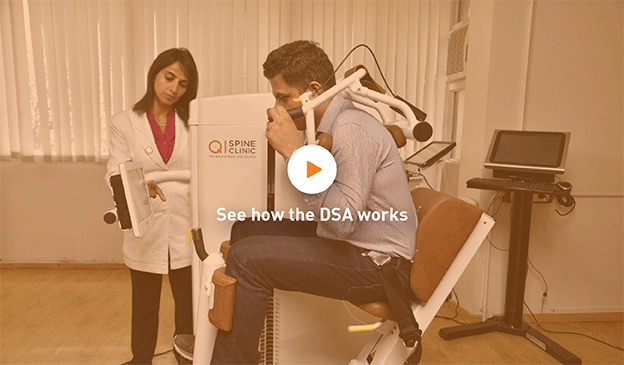
The DSA test works by locking the body in a position that isolates the spine. The computer-controlled device then guides the body through different movements while highly sensitive sensors measure each movement across 21 parameters including the precise angle of movement and the range of movement.
This is the most accurate method of diagnosis for back pain problems and with DSA, specialists can now pinpoint and address the underlying problem very precisely.
Digital Spine Analysis (DSA) is an advanced, computer-based assessment used at QI Spine Clinic to evaluate your spine posture, movement, muscle balance, and alignment. It uses digital sensors and motion analysis to identify the exact cause of back or neck pain without radiation or invasive procedures.
DSA works by placing non-invasive sensors on specific points of your spine. These sensors record posture, spinal movement, muscle activity, and weight distribution. The collected data is then analyzed digitally to create a detailed spine health report.
No. Digital Spine Analysis is completely pain-free, non-invasive, and safe. There are no injections, no needles, and no radiation involved, making it suitable for all age groups.
DSA is recommended for people experiencing:
• Chronic back or neck pain
• Slip disc or disc bulge (L4-L5, L5-S1, cervical disc)
• Sciatica or nerve pain
• Posture-related pain
• Recurrent spine issues
• Back pain after long sitting or poor ergonomics
It is also useful for patients who want a precise diagnosis before starting treatment.
MRI and X-ray mainly show structural changes, while Digital Spine Analysis focuses on functional problems like posture, movement imbalance, and muscle dysfunction. DSA helps detect issues that may not always appear on imaging scans.
Yes. DSA is 100% safe as it does not use radiation. It is suitable for elderly patients and those who want a detailed spine evaluation without exposure to imaging risks.
The entire Digital Spine Analysis process usually takes 30 to 45 minutes, including assessment, analysis, and explanation of results by the spine specialist.
After the analysis, QI Spine specialists explain your spine condition in detail and create a personalized, non-surgical treatment plan based on your exact problem areas.
Yes. By identifying the root cause early, DSA helps design targeted, non-surgical spine treatments. Many patients at QI Spine Clinic avoid surgery through accurate diagnosis and guided therapy.
Digital Spine Analysis is a specialized technology used at QI Spine Clinic as part of their evidence-based, non-surgical spine care approach.
No special preparation is required. Wear comfortable clothing and inform the doctor about any existing spine reports or previous treatments.
Yes. DSA is highly effective for tracking progress and comparing spine health before and after treatment to measure improvement objectively.