Request Appointment
Enter your details and we will be in touch with you shortly;
Or call
8655885566
between 8 am and 8 pm.


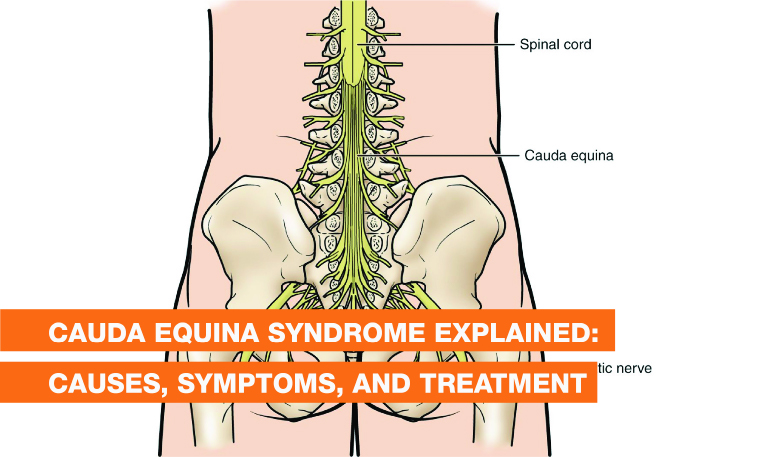
Cauda Equina Syndrome (CES) is a rare but serious neurological emergency caused by compression of the cauda equina, a bundle of nerves at the lower end of the spinal cord. If left untreated, it can lead to permanent nerve damage, loss of bladder or bowel control, leg weakness, and other severe complications. Recognising the early symptoms, understanding the causes, and seeking urgent treatment is critical to prevent lasting damage.
On this blog, we explain everything you need to know about Cauda Equina Syndrome, including its warning signs, underlying causes, and emergency treatment options. But before that, let’s understand “What is Cauda Equina Syndrome?“
To understand Cauda equina syndrome thoroughly it is important to understand the anatomy of the spine. The spinal cord is nothing but a group of neurons arising from the base of the brain running down to the lower vertebra, also known as the lumbar vertebra. Below this point, the spinal nerves continue to branch out, which looks similar to a horse tail, giving it its name, Cauda equina, which is the Latin name for “horse tail”.
The cauda equina consists of nerve roots that control the sensation and movement of the lower body, such as the legs, feet, and pelvic organs. Nerve root compression may result in severe dysfunction involving loss of bladder and bowel control, sexual dysfunction, and impaired mobility of the lower limbs.
Various causes of Cauda Equina Syndrome lead to spinal cord compression. Some of the common causes are as follows:
Symptoms of Cauda Equina Syndrome can vary from person to person. Some of the widely known symptoms are:
The treatment of Cauda Equina Syndrome is crucial and urgent and sometimes requires surgical intervention. The main goal is to immediately relieve pressure from the Cauda Equina to prevent inevitable damage.
Cauda Equina Syndromeis a serious medical condition that needs urgent care. Therefore, it becomes important for the patient and the healthcare provider to identify symptoms, causes, and treatment options. Recognition of the disease as soon as possible can bring about effective surgical intervention and improve outcomes and quality of life among affected patients.
This would help diagnose and treat the condition at an early stage, preventing unfavourable outcomes associated with this potentially disabling syndrome. If you or a loved one exhibits symptoms that may indicate Cauda Equina Syndrome, seek medical care as soon as possible.
CES can occur in anyone but is more commonly seen in those patients who have some risk factors, such as a history of lumbar disc disease, prior spinal surgery, or congenital spinal abnormalities.
While clinical symptoms are of utmost importance in diagnosis, affirmation of the condition and cause of compression of nerves is done through imaging studies such as MRI or CT scans.
Even though some cases cannot be prevented, maintaining good spinal health by regularly exercising, making a comfortable workspace, and preventing injuries are believed to reduce the risks associated with conditions that can cause Cauda Equina Syndrome.
Cauda Equina Syndrome is a serious spinal condition that occurs when the bundle of nerves at the lower end of the spinal cord (called the cauda equina) becomes compressed. These nerves control sensation and movement in the legs, bladder, bowel, and pelvic region.
The most common cause is a large lumbar disc herniation. Other causes may include spinal stenosis, trauma, tumors, infections, or complications after spinal surgery. Any condition that puts pressure on the lower spinal nerves can lead to Cauda Equina Syndrome.
Common symptoms include:
• Severe lower back pain
• Numbness or tingling in the inner thighs, buttocks, or groin (saddle numbness)
• Weakness in one or both legs
• Difficulty controlling bladder or bowel movements
• Loss of sexual function
These symptoms require immediate medical attention.
Yes. Cauda Equina Syndrome is a medical emergency. Delayed diagnosis or treatment can lead to permanent nerve damage, paralysis, or loss of bladder and bowel control.
Diagnosis usually involves a detailed clinical examination and imaging tests such as an MRI scan, which helps identify nerve compression. In some cases, CT scans and nerve studies may also be recommended.
Treatment often requires urgent surgical decompression to relieve pressure on the nerves. Early intervention significantly improves recovery outcomes. Supportive care such as pain management and rehabilitation may follow surgery.
In most cases, surgery is necessary. Non-surgical treatment is generally not recommended once Cauda Equina Syndrome is confirmed, as delaying decompression can result in permanent nerve damage.
Ideally, surgery should be performed within 24–48 hours of symptom onset. Early treatment offers the best chance of restoring bladder, bowel, and leg function.
While not always preventable, early treatment of severe back pain, disc herniation, or spinal conditions can reduce the risk. Prompt medical evaluation for worsening neurological symptoms is key.
Visit our nearest clinic for your first consultation