Request Appointment
Enter your details and we will be in touch with you shortly;
Or call
8655885566
between 8 am and 8 pm.


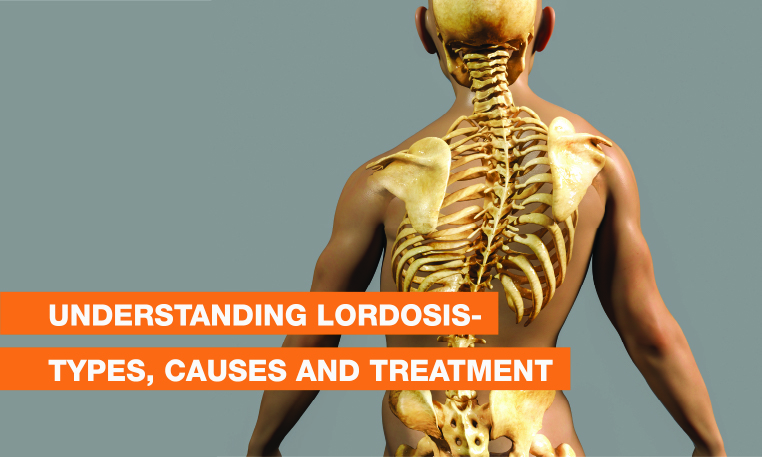
Lordosis is a condition that affects the natural curve of the spine. It usually occurs when there is an excessive inward curve in the lower back or neck. A mild curve is normal, but when the curve becomes too deep, it can cause posture problems and back pain. Many people search for “what is lordosis” or “lordosis meaning” to understand this spinal condition better. In this article, we explain its types, symptoms, causes, and treatment options in simple terms.
Lordosis is an abnormal inward curvature of the spine. The spine naturally has slight curves that help balance the body and absorb shock while walking or moving. However, when the inward curve becomes excessive, it can affect posture and lead to discomfort.
This condition most commonly affects the lower back (lumbar spine) but can also occur in the neck (cervical spine). In severe cases, lordosis may cause the abdomen to stick out and the hips to shift backward.
There are five types of lordosis:
It is a common type that occurs due to obesity. There is an imbalance of the muscles of the stomach and back. Due to excessive weight in the stomach area, the back is pulled forward. The muscles of the stomach and back become weak and cannot support the spine. Excessive weight pulls the spine to curve forward.
Laminectomy is a surgery done to remove some vertebrae from the spine to remove pressure on the nerves. This makes the spine unstable and causes hyperlordosis. Hyperlordosis means the spinal curve is increased. It is generally found when someone goes under surgery to remove tumours from the spine.
Any injury or trauma to the spine can cause back pain in the lower part. It is often found in children or athletes who suffer from traumatic injury while playing sports. The connections between the spine become weak and become ill-shaped and weak. If proper rest is not taken, the vertebrae slip forward, pressing the nerves. This causes numbness, pain, tingling, and weakness in the legs.
It is a rare type of lordosis that occurs due to contracture of the hip joint. This disturbs the normal spinal alignment and causes back pain.
Neuromuscular lordosis includes different types of disorders and can cause various types of spinal curvature disorders.
Based on the part of the spine affected, there are two types:
In cervical lordosis, the neck or cervical region of the spine is affected. There are seven vertebrae in the cervical spine. The neck is pushed forward more than normal and causes pain in the neck.
It is called swayback. In lumbar lordosis, the hips and pelvis move forward. The stomach sticks out, and the hips stick behind.
In most cases, lordosis does not have a cause. It develops over time. Lumbar lordosis has no cause. This is noticed in people with increased kyphosis. Other health problems that can cause lordosis are:
Some people do not experience any symptoms of lordosis. They never know until they are diagnosed by a doctor. The postural deformity may be noticed by other people. In chronic cases, people may have the following symptoms:
Difficulty in walking or standing for a long time.
Postural defects such as the head neck leaning forward more than normal, hips getting pushed forward, butt sticking out, and there is more space in the lower back when lying down.
Lordosis is usually diagnosed through a physical examination and imaging tests. A spine specialist first checks your posture, spinal alignment, and flexibility. The doctor may ask you to stand straight or bend forward to observe the curvature of your spine.
During the physical exam, the doctor looks for:
An X-ray is the most common test used to confirm lordosis. It helps measure the degree of spinal curvature and determine whether the curve is mild, moderate, or severe.
If nerve compression or other spine problems are suspected, an MRI or CT scan may be recommended. These tests provide detailed images of soft tissues, discs, and nerves.
Doctors may measure the spinal curve angle using imaging reports. This helps decide whether treatment is necessary and what type of treatment is suitable.
Treatment of lordosis is based on the severity of spinal alignment and the underlying causes of lordosis. Treatment of lordosis includes the following:
A physiotherapist at the QI Spine Clinic can suggest the best possible exercises to enhance the strength of the muscles that support the spine. Exercise will help to support the abdominal and lower back muscles. Other physical therapies such as massage and spinal manipulation can also help to enhance movement and reduce pain.
The orthopaedic doctors at the QI spine clinic are trained to improve posture by using ergonomic adjustments. They can help patients to maintain a neutral spine position while standing or sitting. The orthopaedic doctor can also suggest exercises to enhance the strength of core muscles for proper spinal alignment.
Braces may be advised in some cases. This will help to restore the normal spinal alignment.
If there is inflammation in the back muscles or back pain, the doctor may prescribe non-steroidal anti-inflammatory medications to reduce pain and inflammation in the back.
Surgery is done in severe cases. When other methods of treatment do not give relief to the patients, then surgery is recommended. Surgical treatment includes decompression, spinal fusion, and corrective osteotomy to improve spinal alignment and stabilise the spine.
Lordosis is a postural defect and it causes misalignment of the spine. It is of different types depending on the cause and area affected. A proper diagnosis is required for getting the best treatment for which you should consult the QI Spine specialists. Non-invasive treatments such as physical exercises, massage therapy, lifestyle modifications, and postural correction can help in some cases. In severe cases, surgical intervention is required to correct the spinal curvature.
Visit our nearest clinic for your first consultation
The orthopaedic doctor at the QI Spine Clinic will conduct a physical examination of your back to check the spinal curvature. If he finds anything unusual, he may order some diagnostic tests such as X-rays, CT scans, and MRIs to diagnose the problem.
If you experience excessive back pain while moving, standing, or sitting for a long time, you should consult with a QI Spine specialist to get diagnosed. If your pain does not improve with rest or over-the-counter medications, you should get an immediate consultation with the spine specialist at the QI Spine Clinic.
It can occur in all age groups. It is most frequently seen in people above 50 years, kids who are growing rapidly, and pregnant women.
Lordosis is an age-related disorder. People at an early age can manage it by doing exercises and rest. It cannot have a huge impact on the quality of life.