
 Call Us

The Lumbar Spine: Anatomy, Function, and Its Importance
Latissimus Dorsi
 4 Mar 2025
 5 min read
What is the Lumbar Spine?
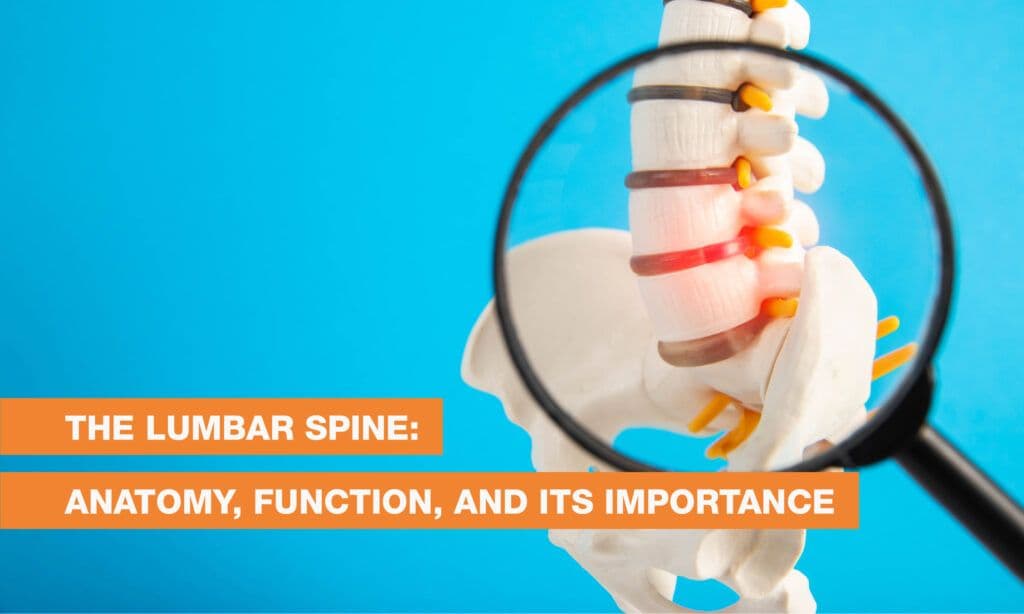
The lumbar spine is the lower part of your back. The lumbar spine consists of five bones L1-L5. The lumbar spine also has other structures, such as muscles, tendons, intervertebral discs, nerves, and ligaments. The lumbar spine acts as a pillar for your body and is also responsible for performing different body movements. One must know what is lumbar spine to understand its disorders.
Lumbar Spine Anatomy
It is important to understand the lumbar spine, meaning to deal with its disorders effectively. The lumbar spine makes up the largest part of the spine. It is located between the thoracic and sacral regions of the spine. The lumbar spine forms the thicker and larger part of the spine. The main function of this part of the spine is to support the entire spinal column and bear your body weight. The muscles and ligaments attached to the lumbar spine also help in walking, sitting, running, and lifting in different directions. Let us understand the anatomy of the lumbar spine in detail.
Muscles and Soft Tissues of the Lumbar Spine
Muscles and ligaments of the lumbar spine anatomy provide stability to the lower part of the back and help in bending forward and backwards.
The muscles and soft tissues found around the lumbar spine are:
Latissimus Dorsi
It is a triangular-shaped large muscle. It extends from the sixth thoracic vertebrae to the last three to four ribs. It mostly covers the middle and lower back.
Paraspinals
It is a combination of three muscles situated along the length of the spine. The main function of these muscles is to help you bend, extend, and rotate. They also help keep your back upright.
Iliopsoas
It also consists of three muscles and helps to move your hip joint. These muscles stabilise your hip joint and lower back when you stand up from a chair.
Disks in the lumbar spine
Lumbar spine discs act as shock absorbers. They are placed between each vertebra. The Lumbar spine consists of five discs. They also support body weight and allow movement between different vertebrae.
Ligaments of the Lumbar Spine
Ligaments provide stability to the lumbar spine anatomy and are responsible for the smooth movement of the spine. Important ligaments are:
- Ligamentum flavum: These are present on the backside, where the spinal cord passes through the opening of each vertebra. These cover and protect the spinal cord.
- Anterior longitudinal ligament: It extends down in front of the lumbar vertebrae. This ligament keeps the lumbar joints stable and helps to prevent extensive backward bending of your spine.
- Supraspinous ligament: This ligament joins the tips of the L1 to L3 vertebrae. It helps to limit the forward bending of the spine.
- Posterior longitudinal ligament: It extends down in the back of the lumbar vertebrae. It helps to limit extensive forward bending of the spine.
- Intertransverse ligament: It is responsible for joining the transverse processes of the vertebrae. It also helps to prevent side bending of the spinal column.
Nerves of the Lumbar Spine
There are five pairs of nerves in the lumbar spine. The nerves carry messages between the brain and muscles. They run down the lower back and join other nerves to form a network.
- L1 spinal nerve: It provides sensation to the genital and groyne region and supports the movement of hip muscles.
- L2, L3, and L4 spinal nerves: These nerves provide sensation to the thighs and lower legs. These nerves also support hip and knee muscle movements.
- L5 spinal nerve: This nerve provides sensation to the lower leg, foot, and toes. It also helps to support hip, knee, and foot movements.
Functions of the Lumbar Spine
The lumbar spine performs a myriad of functions, such as:
Movements
The lower back muscles of the lumbar spine can allow the movement of your trunk in all directions. Thus, the lumbar spine is responsible for side bending, forward bending, backward bending, and trunk rotation.
Supports body weight
Another important function of the lumbar spine is supporting body weight. The lumbar spine supports the upper parts of the spine and bears the most body weight. It also helps carry and lift heavy items.
Leg movements
The nerves present in the lumbar spine, and cauda equina help to control sensation and movements in the lower legs. The lumbar spine also helps in the movement of your foot and toes.
Importance of the Lumbar Spine
The lumbar spine makes up the most significant part of the spinal column. It supports the body weight the most and helps perform body functions effectively. The nerves of the lower spine communicate with other body parts and help them to function properly. The nerves from the lumbar spine communicate with the Pelvic region, bladder, hip muscles, and large intestine and help these parts to perform their functions effectively.
An injury or misalignment of the lumbar spine can lead to sciatica, digestive problems, sexual disorders, and other health problems. Therefore, it is important to keep your lumbar spine in optimum health to effectively bear your body weight and help other organs perform their functions.
Strengthening the lower back muscles can protect your lower back. Under the supervision of an expert, you can do mild to moderate exercises to enhance the strength of your lower back muscles. You can also protect against lower back problems by maintaining an ideal body weight and posture.
Conclusion
The lumbar spine consists of L1-L5 vertebrae and forms the most significant part of the spinal column. It also consists of other structures, including muscles, ligaments, and nerves. The lumbar spine has various functions, such as moving different body parts, providing sensation to the hip joints and lower legs, and bearing the body weight. Thus, caring for the lumbar spine is very important to stay healthy.
FAQs
The most common problems of the lumbar spine include muscle strains, degeneration of intervertebral discs, dysfunction of joints, and [ lumbar spinal stenosis](/conditions/lumbar-spinal-stenosis). If you experience muscle strain in the lower back, you must immediately consult with an orthopaedician.
Your orthopaedician may advise you to get an X-ray or a CT scan done to diagnose the problems associated with the lumbar spine. In severe cases, MRI may be advised to identify the root cause of the problem.
Yes, strains in the lumbar spine can be managed effectively without surgery. If your doctor finds no structural problem in the lumbar spine, he/she may advise you to rest, use an ice or heat pack, and undergo physical therapy.
Written By

Gautam Shetty

Orthopaedic Surgeon
Dr. Gautam Shetty is an MS (Orthopaedic Surgery)-qualified Orthopaedist with over 20 years of experience in the non-surgical treatment of spine and musculoskeletal conditions, having treated over 20,000 patients. Areas of expertise include spine rehabilitation, musculoskeletal conditions and orthopaedic surgery.
View Full ProfileMedically reviewed by: Isha Ghelani, Spine Specialist
Still have questions about your pain?
Share your details and a QI Spine care coordinator will call you back to help book the right specialist.
Related Articles
View All Read More →
Understanding Scoliosis and its progression
Scoliosis progression is more common in women due to hormonal and anatomical factors. Learn causes, curve progression signs, and treatment options.
 Read More →
Orthopaedic Care: Understanding Its Meaning and Importance
What is orthopaedic? Learn the meaning of orthopaedic and orthopaedics in simple words, including treatments, doctors and common bone and joint problems.
 Read More →
Lordosis: Meaning, Symptoms, Causes & Treatment
What is lordosis? Learn about lordosis meaning, symptoms, causes, and treatment options. Understand how abnormal spine curvature affects posture and health.
Subscribe to Our Newsletter
Get new articles on back, neck and joint health delivered straight to your inbox — no spam, ever.