Request Appointment
Enter your details and we will be in touch with you shortly;
Or call
8655885566
between 8 am and 8 pm.


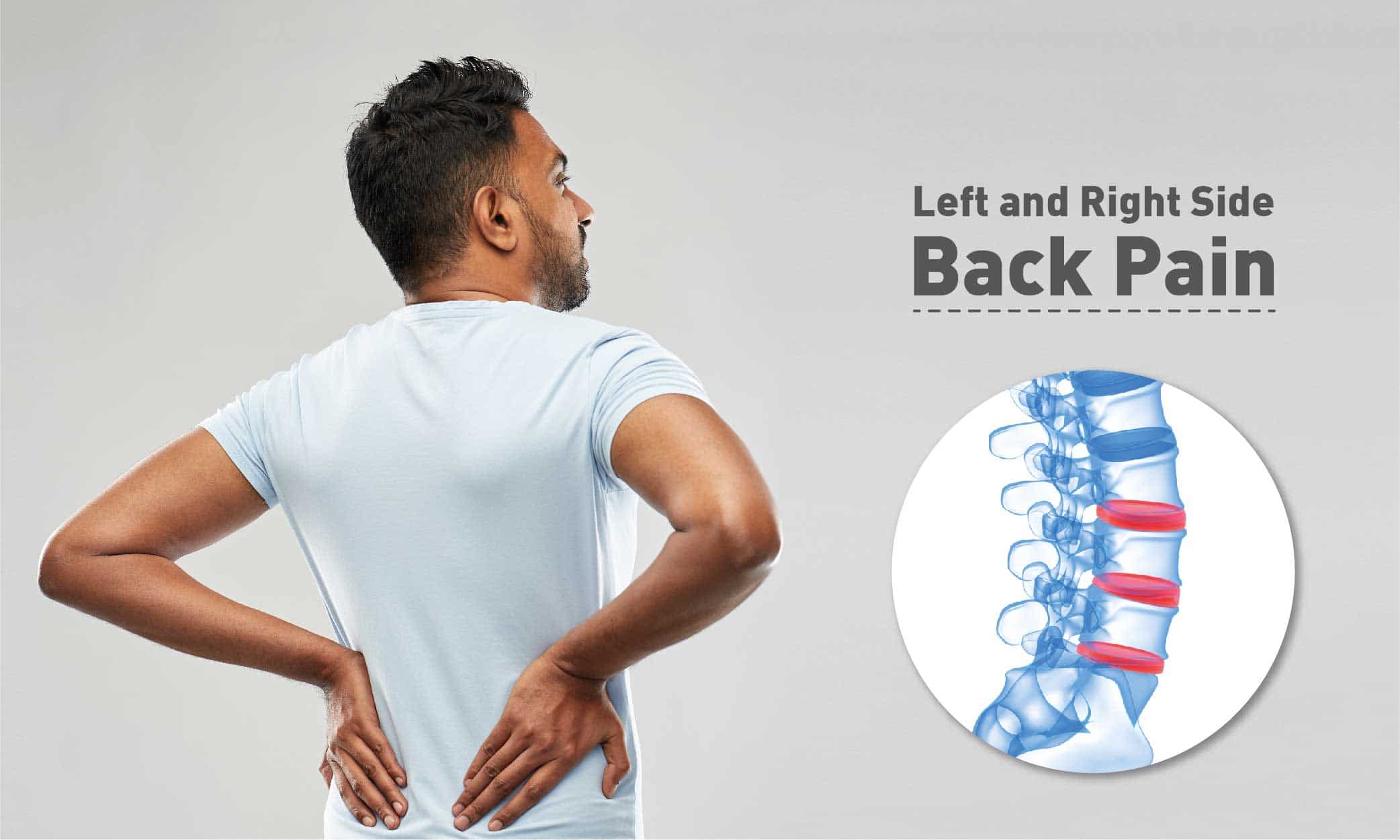
Back pain affecting one side of your body can be more than just uncomfortable. It can significantly impact your daily activities and quality of life. While general back pain is common, experiencing pain specifically on the left or right side often indicates distinct underlying causes that require targeted approaches for effective treatment.
Understanding why your back hurts on one side is the first step towards finding relief. This comprehensive guide explores the causes, diagnostic methods, and treatment options for both left side back pain and right side back pain, helping you make informed decisions about your health.
One-sided back pain differs from general back pain. It localizes to either the left or right side of your spine and surrounding areas. This often provides important signs about the underlying cause, as many organs and structures are positioned asymmetrically in your body.
The pain may range from a dull ache to sharp, stabbing sensations, and can be constant or intermittent. Some people experience pain that worsens with specific movements, while others notice it more during rest or certain positions.
These are some reasons that cause pain in the right side of your back:
One of the most frequent causes of right side back pain is muscle strain. This typically occurs when you:
Your right kidney sits in the upper right portion of your abdomen, just below your ribcage. Several kidney-related conditions can cause right side back pain:
The liver occupies the upper right portion of your abdomen. Liver-related issues that can cause right side back pain include:
These conditions may also be present with additional symptoms such as jaundice, abdominal swelling, fatigue, and digestive problems.
While appendicitis typically causes lower right abdominal pain, it can sometimes come up as right side back pain, especially if the appendix is positioned unusually. This medical emergency requires immediate attention and typically includes symptoms like fever, nausea, vomiting, and loss of appetite.
Problems with your gallbladder, located beneath your liver, can cause pain that radiates to the right side of your back. Common conditions include:
The pain often occurs after eating fatty meals and may be accompanied by nausea and digestive discomfort.
Here are some reasons that can cause pain in the left side of your back:
Similar to right-sided issues, left side back pain frequently results from muscle strains or ligament sprains. These can develop from:
The pain typically worsens with movement and improves with rest, though prolonged sitting may also aggravate the discomfort.
Your left kidney can experience the same problems as the right kidney. Left-sided kidney stones, infections, or other kidney diseases can cause pain in the left flank area, often accompanied by urinary changes and systemic symptoms.
The pancreas extends across your upper abdomen, with its tail positioned on the left side. Conditions affecting this organ can cause left side back pain:
Your spleen sits in the upper left portion of your abdomen. Splenic problems that may cause left side back pain include:
These conditions may present with additional symptoms like easy bruising, fatigue, and feeling full quickly when eating.
While less common, certain heart conditions can cause pain that radiates to the left side of your back. A heart attack, angina, or aortic dissection may present with back pain alongside chest discomfort, shortness of breath, and arm pain. These require immediate emergency medical attention.
Some conditions can cause pain on either the left or right side of your back:
| Condition | Description | Key characteristics |
|---|---|---|
| Herniated disc | When the soft interior of a spinal disc pushes through its outer ring | Sharp pain, numbness, or tingling that may radiate down the leg |
| Spinal stenosis | Narrowing of the spinal canal | Pain that worsens with standing or walking, improves with sitting or leaning forward |
| Degenerative disc disease | Age-related wear and tear of spinal discs | Chronic pain that fluctuates in intensity |
| Scoliosis | Abnormal curvature of the spine | Visible asymmetry, uneven shoulders or hips |
| Sciatica | Irritation or compression of the sciatic nerve | Pain radiating from the lower back through the buttock and down the leg |
| Osteoarthritis | Breakdown of cartilage in spinal joints | Stiffness, especially in the morning, pain with movement |
Proper diagnosis is essential for effective treatment. Healthcare providers use various methods to identify the cause of one-sided back pain:
Your doctor will begin by asking detailed questions about your symptoms:
During the physical examination, your doctor will assess your range of motion, check for tender areas, evaluate your posture, and perform physical tests to check reflexes and nerve function.
Depending on your symptoms, your doctor may order:
Blood and urine tests can help identify:
In some cases, additional tests may be necessary:
Treatment for one-sided back pain depends on the underlying cause, severity, and duration of symptoms.
Many cases of left side back pain and right side back pain respond well to conservative approaches:
Medical interventions
For more severe pain, additional treatments may be necessary:
Surgery is typically reserved for severe cases or when conservative treatments fail. Surgical interventions may be considered for:
While not all causes of one-sided back pain are preventable, you can reduce your risk:
While many cases of back pain resolve with conservative treatment, certain symptoms require urgent medical evaluation:
These symptoms may indicate serious conditions requiring immediate intervention.
QI Spine offers orthopedic-designed, non-surgical treatments for side back pain, addressing imbalances through precise diagnostics and personalized treatment. Our approach focuses on root causes like muscle strain, disc issues, or spinal misalignment specific to left or right-side discomfort. This ensures relief and long-term spine health without surgery.
For left or right side back pain, we identify unilateral issues such as soft tissue injuries, disc bulges, or sacroiliac inflammation via thorough assessment including history, physical exams, and DSA. Our treatment includes pain management through cell repair therapy, targeted exercises (e.g., pelvic tilts, glute bridges), and correction of movements to restore balance and prevent recurrence. This conservative plan achieves high recovery rates, often avoiding surgery.
Do you have any of the symptoms mentioned above for one-side back pain? At QI Spine, we provide the first in-depth consultation at no cost. Call on 86558 85566, and our specialists will schedule your appointment with your nearest location of QI Spine. We’ve helped over 1.2L+ patients reclaim active lives; we can help you too!
Lower Back pain is common; at times it could happen specifically at one side only. Sprains and strains can occur randomly due to an injury, sudden movement or lifting a heavy object. Sprain or strain can happen on the right side of your lower back, which can be painful and also restricts movement in that area.
Upper right back pain can restrict the freedom of movement and make it hard for you. Right back pain is usually due to problems with the spine such as vertebrae, spinal discs, nerves, muscles, ligaments and tendons. Sometimes, it may arise out of critical conditions too. Therefore, it is necessary to diagnose the cause of pain to receive the best treatment.
Middle back pain is the pain that you feel in the region of the back between the rib cage and the base of the neck. In most cases, middle back pain on the right is self-limiting and simple pain relief is sufficient. However, if the middle back pain on the right is more severe or is prolonged then the investigation will be needed to determine the underlying cause of pain.
Conclusion
Left side back pain and right side back pain can result from various causes ranging from simple muscle strains to serious problems. While many cases respond well to conservative treatments like rest, ice, heat, and over-the-counter pain relievers, persistent or severe pain needs professional evaluation. A healthcare provider can perform appropriate diagnostic tests to identify the underlying cause and recommend targeted treatments.
Remember that prevention plays a crucial role in maintaining back health. By practicing proper posture, exercising regularly, using correct lifting techniques, and maintaining a healthy lifestyle, you can significantly reduce your risk of developing one-sided back pain.
One-sided back pain can happen because of multiple causes. Common reasons include muscle strains from overuse, poor posture, or sudden movements. Organ-related issues can also trigger pain on specific sides: right side back pain may result from kidney stones, liver problems, gallbladder disease, or appendicitis, while left side back pain can be caused by kidney issues, pancreatitis, or spleen problems. Spinal conditions like herniated discs, sciatica, or degenerative disc disease can affect either side depending on which structures are involved.
For immediate relief, try the following approaches:
– Apply ice for the first 48-72 hours to reduce inflammation, then switch to heat therapy
– Take over-the-counter pain relievers like ibuprofen or acetaminophen
– Rest briefly but avoid prolonged bed rest
– Perform gentle stretching exercises
– Maintain proper posture and avoid activities that worsen the pain
– Use a supportive mattress and pillow for sleep
If pain persists beyond a few days or worsens, consult a healthcare provider for physical therapy, prescription medications, or other targeted treatments based on the underlying cause.
For immediate relief, try the following approaches:
– Apply ice for the first 48-72 hours to reduce inflammation, then switch to heat therapy
– Take over-the-counter pain relievers like ibuprofen or acetaminophen
– Rest briefly but avoid prolonged bed rest
– Perform gentle stretching exercises
– Maintain proper posture and avoid activities that worsen the pain
– Use a supportive mattress and pillow for sleep
If pain persists beyond a few days or worsens, consult a healthcare provider for medical movements protocol, prescription medications, or other targeted treatments based on the underlying cause.
Surgery is typically a last resort after conservative treatments have failed. Consider surgery only if:
– You’ve tried exercises, medications, and other non-surgical treatments for several months without improvement
– You have severe nerve compression causing progressive weakness or loss of function
– You experience loss of bladder or bowel control
– Imaging tests show significant structural problems requiring surgical correction
– The pain severely impacts your quality of life and ability to function
Most cases of one-sided back pain resolve with conservative treatment. Discuss all options thoroughly with your healthcare provider and consider getting a second opinion before proceeding with surgery.
Visit our nearest clinic for your first consultation